

Today it was refreshing to hear Ethan Sharygin speak to the Salem City Club about Oregon's changing demographics. As befits the Director of the Population Research Center at Portland State University, Sharygin was 100% factual and 0% political.
These days that ratio often is completely reversed, especially when the fact-challenged side of the political spectrum is doing the talking. So my mind relished the data-filled slides Sharygin shared. Because of Covid, we met via Zoom, which made it easy for me to grab screenshots of most of his slides.
In the course of introducing Sharygin, Russ Beaton made an interesting observation about how things have changed in Oregon during the past 133 years. In 1888 the Oregonian newspaper expressed a hope that the wealth of rural areas spills into the cities.
Now the situation is pretty much the opposite.
 Oregon's population has been growing at 1% a year recently, while the United States as a whole has been growing at 0.7%. This enabled Oregon to snag an additional Congressional seat, leaving us with six rather than five.
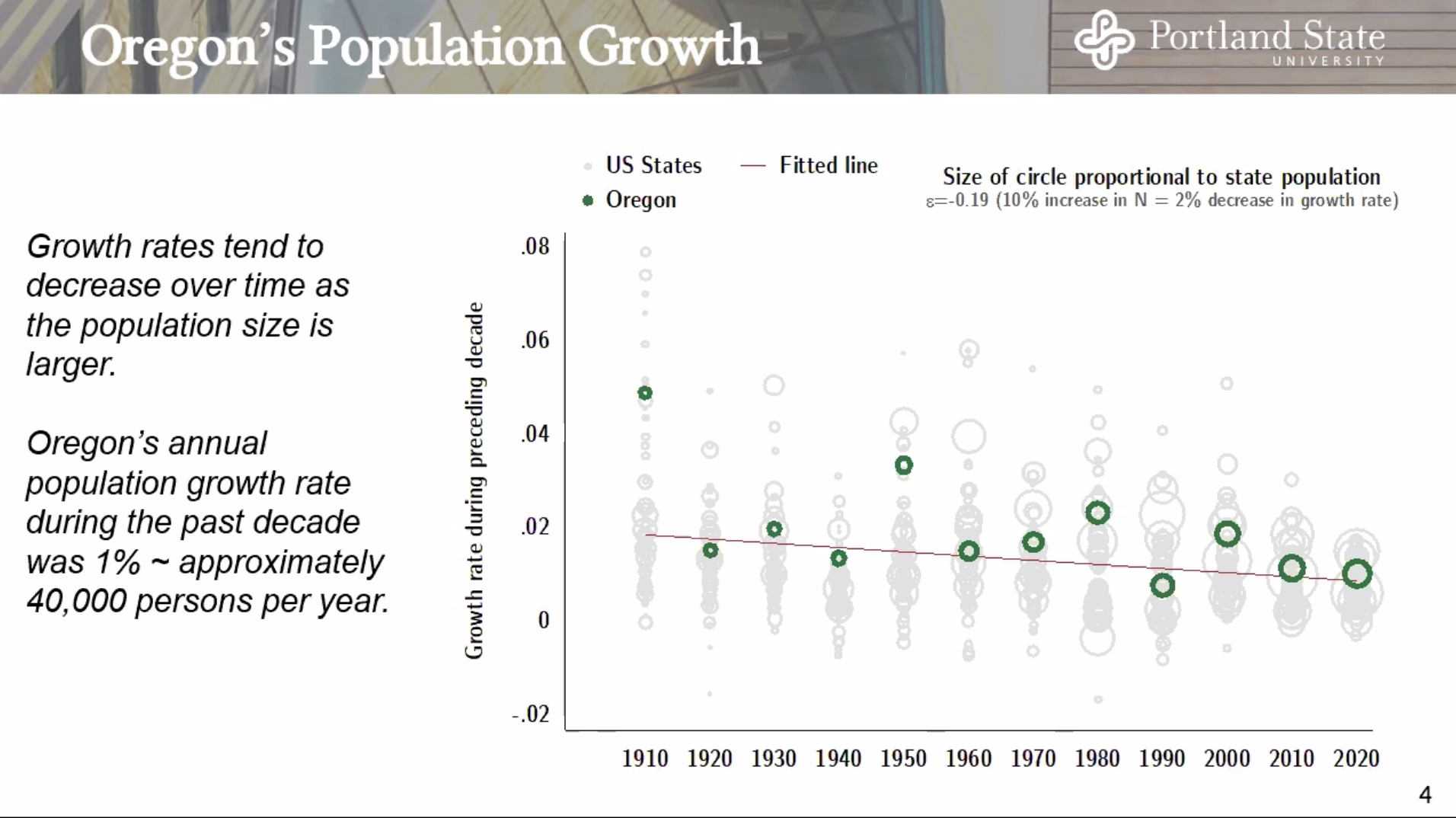
I wasn't aware that generally the rate of population growth slows as the population increases. The figure above shows that Oregon's growth rate has been declining over the past 110 years. The 1900's and 1940's were marked by rapid growth in Oregon, while the 1980's saw slow growth. The gray circles are other states. In the 1900's some states had close to 8% annual growth. Recently, most states cluster around 0 to 2% annual growth.
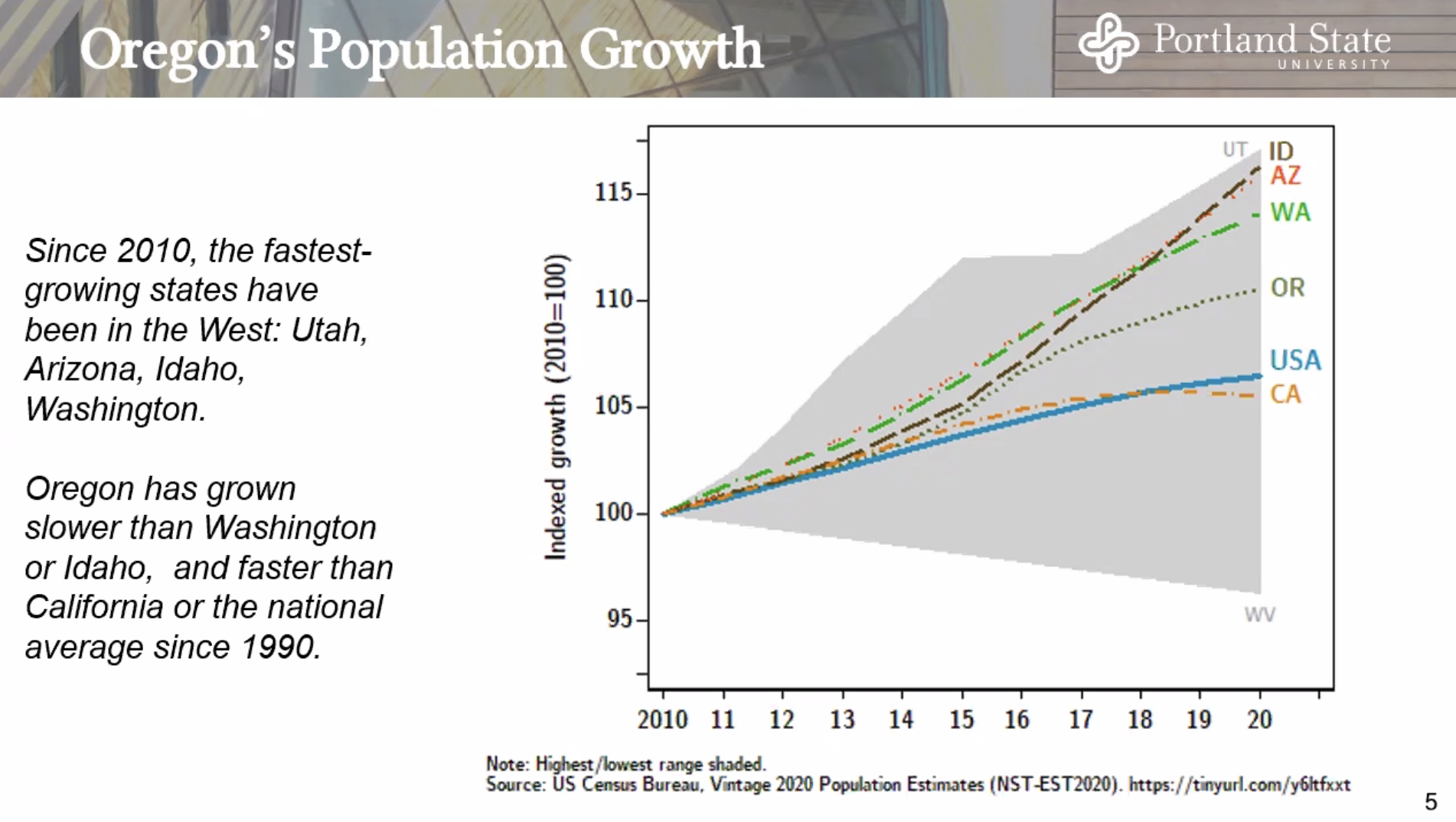 While Oregon grew faster than the nation as a whole from 2010-20, Washington, Arizona, Idaho, and Utah grew even faster. But, hey, we whipped California's population growth ass.
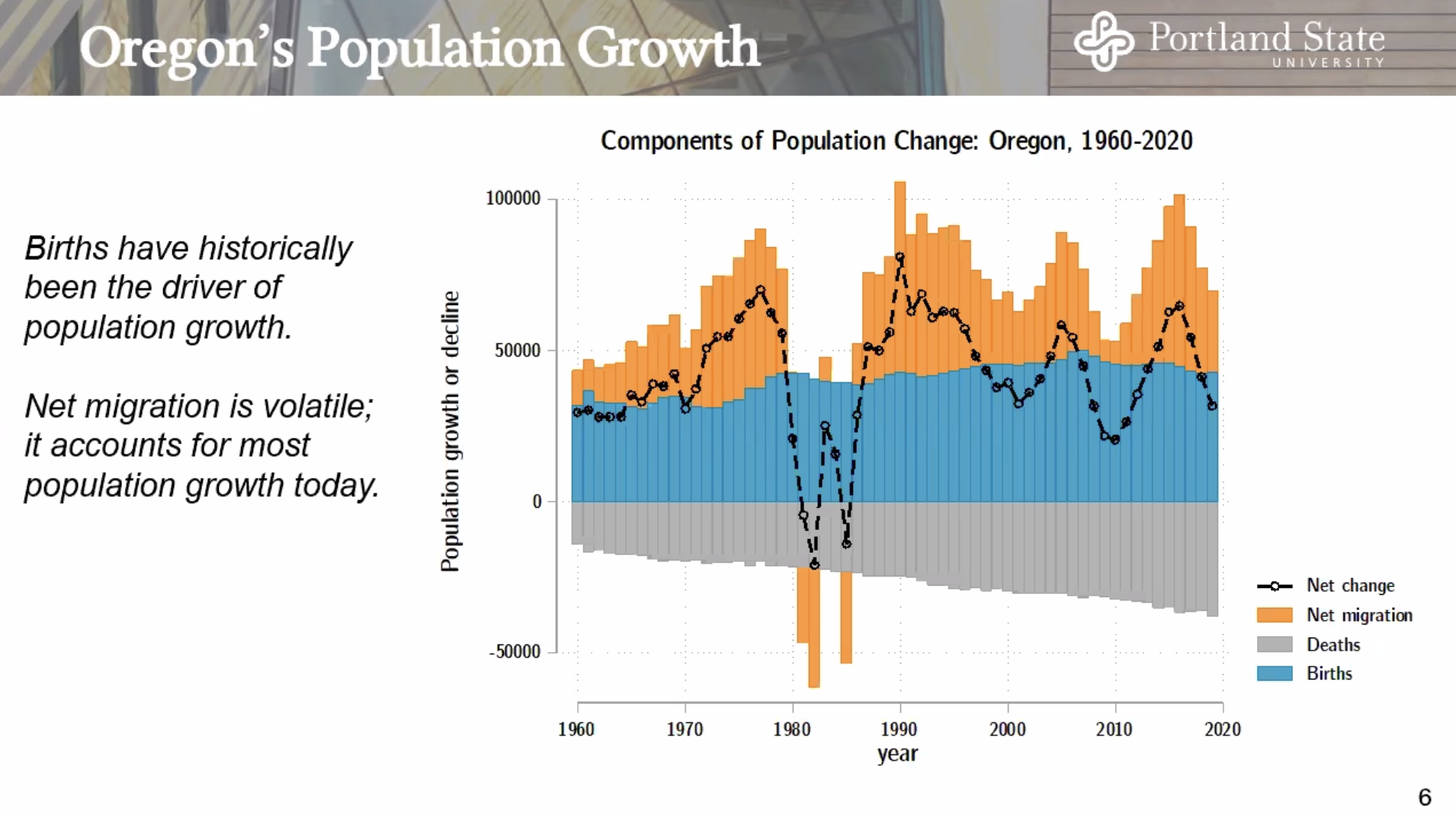 Some demographic truisms are obvious. Population change is a function of births minus deaths, plus net migration. This chart shows that net migration is a volatile factor in how many people Oregon gains or loses each year. In the 1980's Oregon's population declined in three years, largely because of people leaving the state. In recent years net migration into Oregon has been going down.
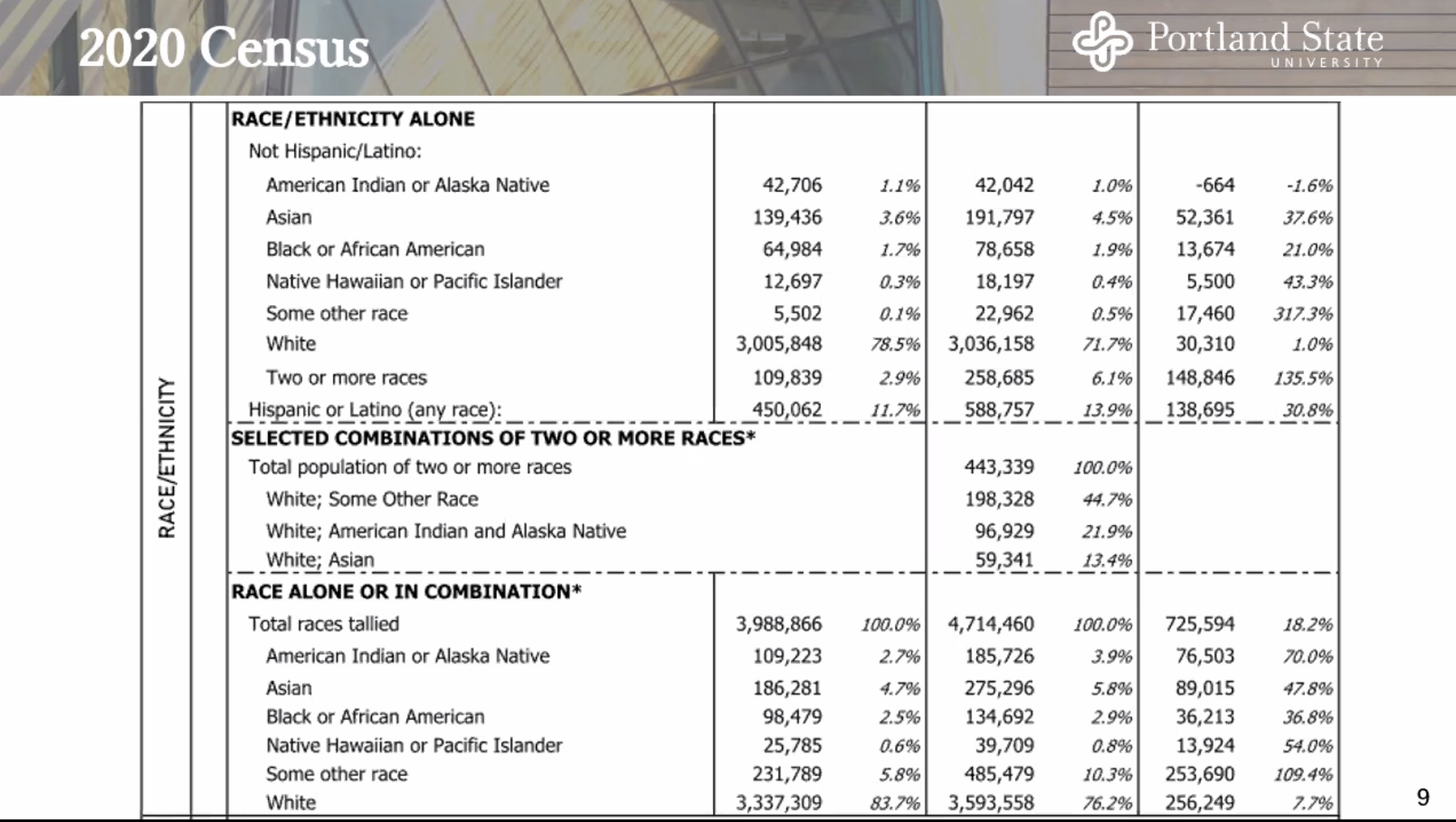
This slide shows how Oregon's race/ethnicity breakdown changed from the 2010 census (left column) to the 2020 census (middle column), with the right column showing the difference between 2010 and 2020. The white population declined from 79% to 72%. Hispanic/Latino rose from 12% to 14%. Black/African American rose slightly from 1.7% to 1.9%. I don't understand the combinations of races data very well, so will let that part of the slide speak for itself.
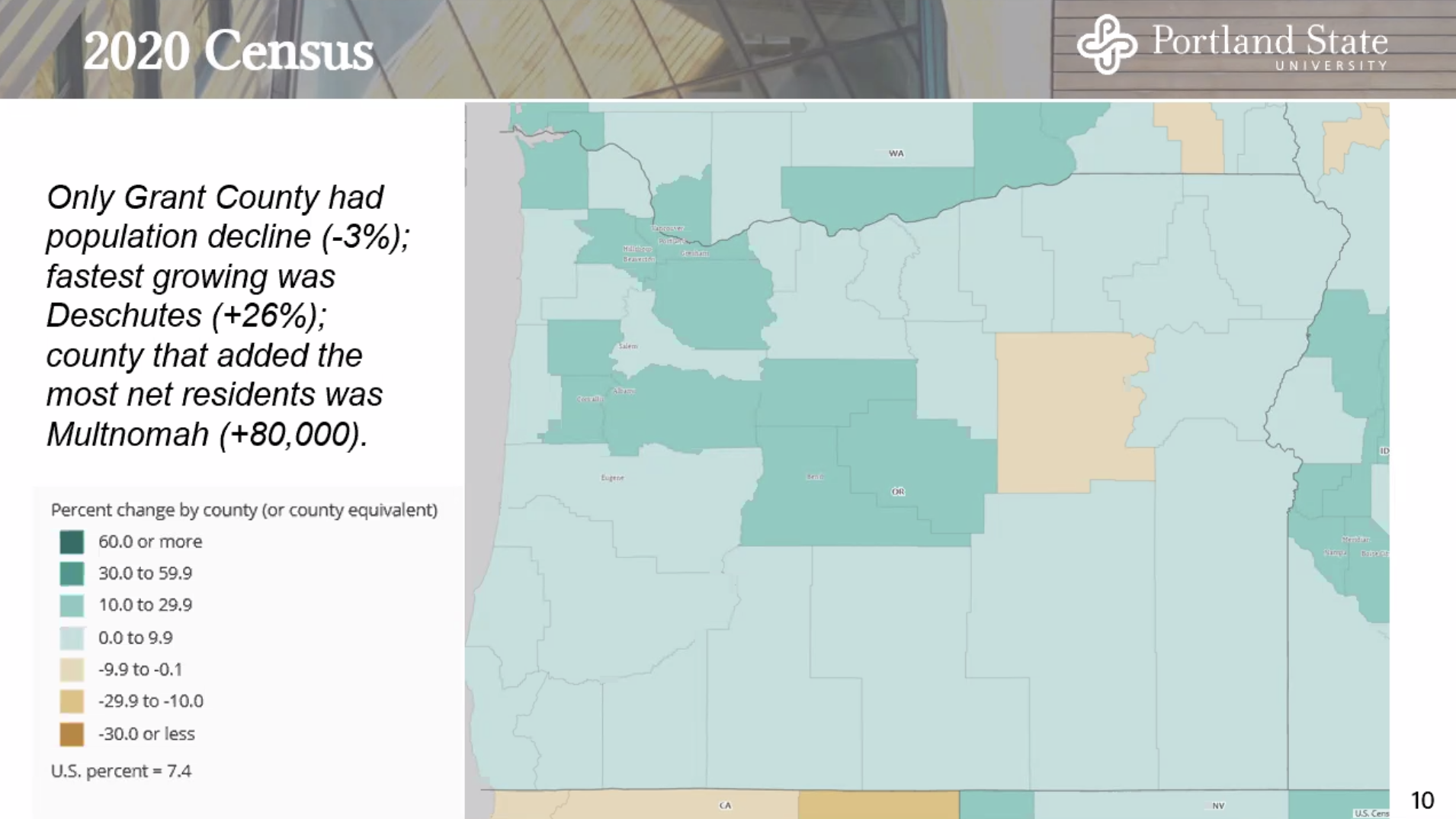
Compared to rural areas in other parts of the country, the population in rural Oregon has been holding up fairly well. Only one county lost population, Grant, while Deschutes (where Bend is) grew the fastest. Marion County grew by 10%. Sadly, in the competition for Oregon's second largest city after Portland, Eugene (176,000) beat Salem (175,000).
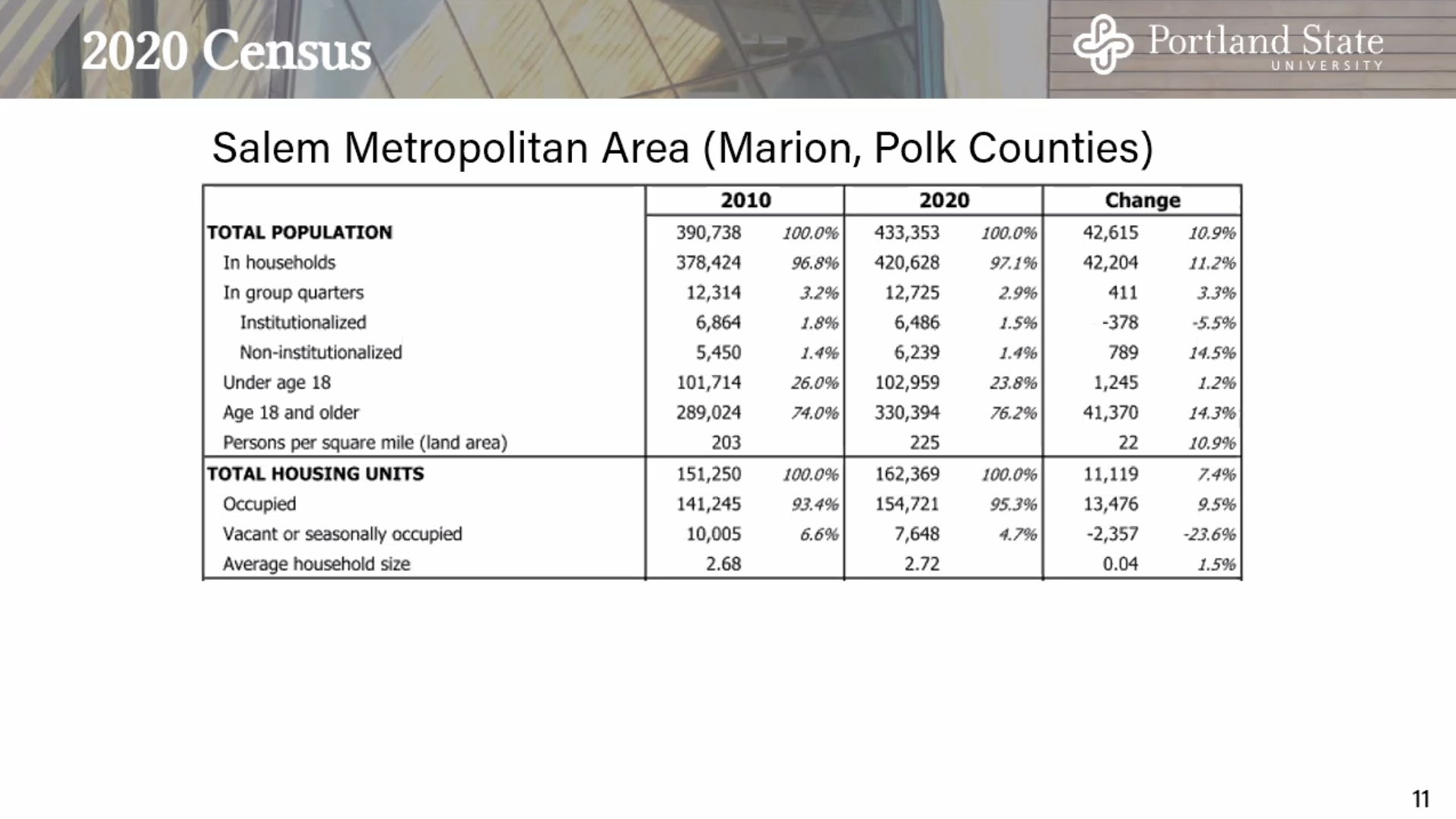 Looking at the Salem Metropolitan area, the population 18 and older increased from 74% to 76%, with a corresponding decline in those under age 18. Vacant or seasonally occupied housing units went from 6.6% to 4.7%, putting pressure on housing affordability/availability. However, Sharygin noted that the average household size has been quite steady, which apparently indicates that, say, there aren't large numbers of young people living with their parents because they can't find a place of their own.
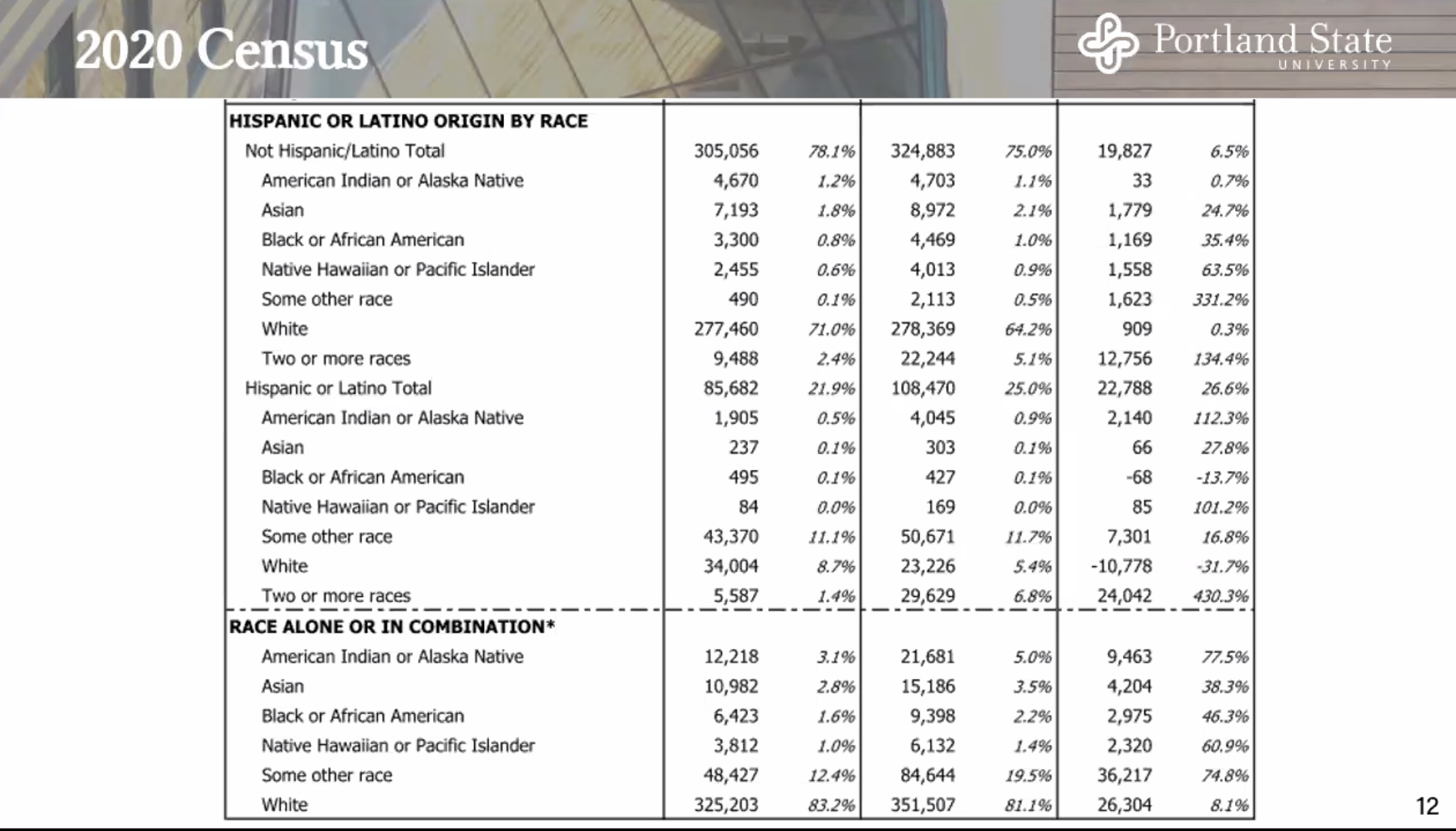
In the Salem Metro area, the white population declined from 71% to 64%, while Hispanic/Latino increased from 22% to 25%. The Black/African American population rose slightly from 0.8% to 1.0%.
 The next slides are data from the American Community Survey of 2% of the United States population, which replaced the census long form.
Sharygin highlighted that Californians migrating to Oregon are most likely to settle in SW Oregon and Deschutes County. Overall, 46% of Oregonians were born in Oregon. I'm part of the 22% who were born somewhere other than Oregon, California, or a Pacific region state (in my case, Massachusetts). Sharygin noted that there has been a decline in migration from Mexico.
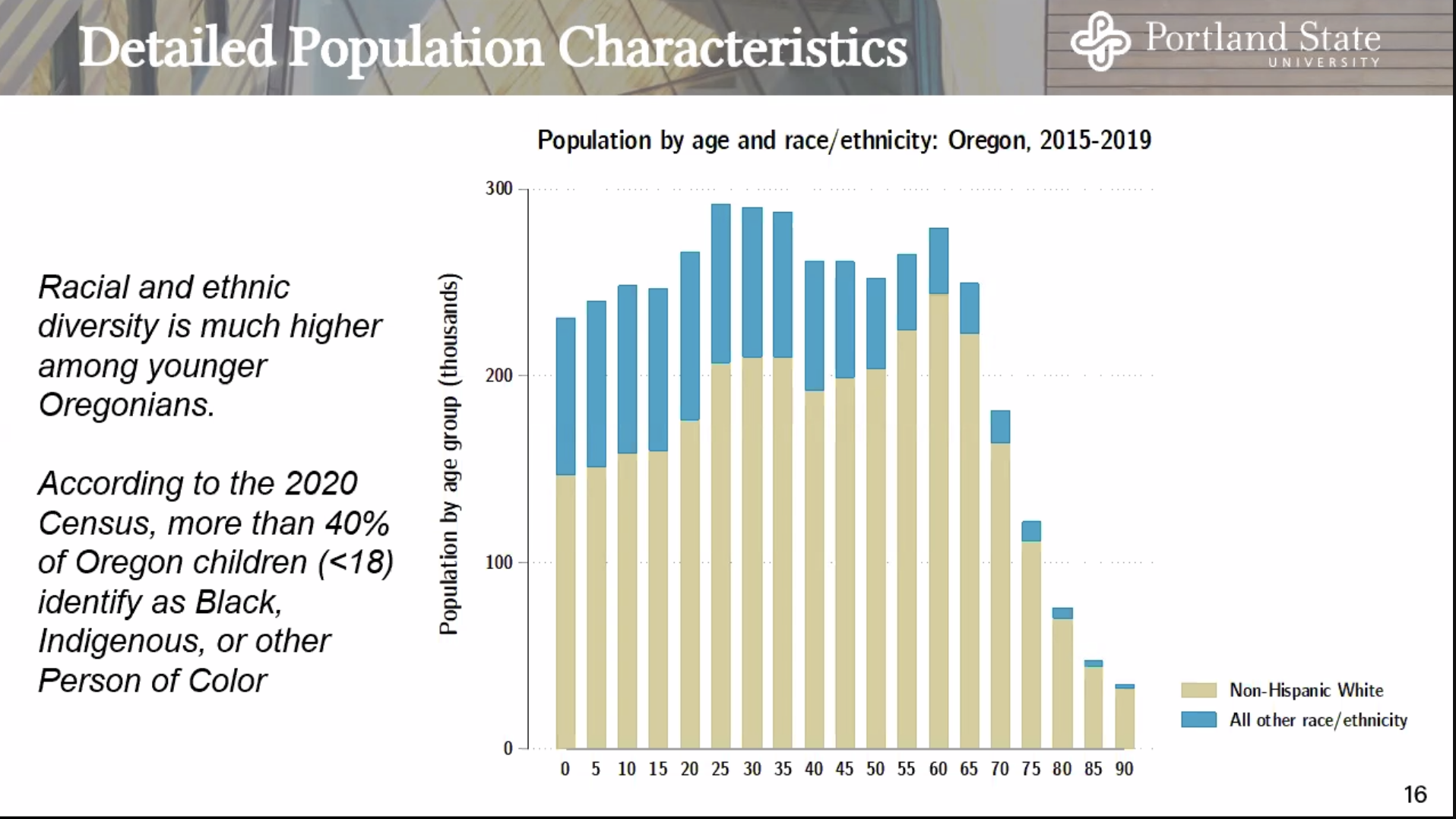
The BIPOC population (Black, Indigenous, other Person of Color) percentage is much higher among younger Oregonians. Sharygin didn't discuss the reason for this. Likely it has to do with birth rates and migration patterns.
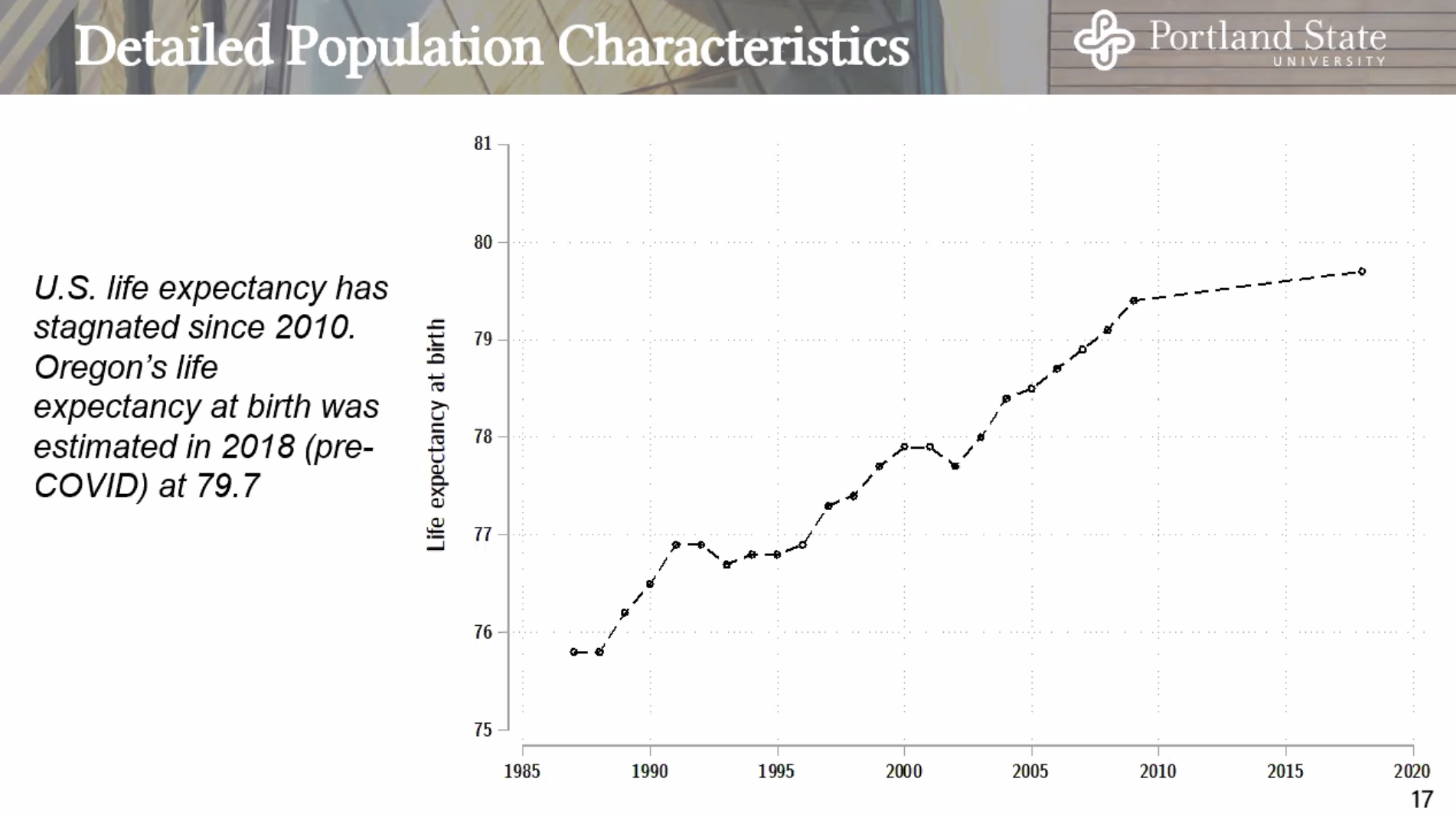
The life expectancy at birth for Oregonians is 82 years for women and 77 years for men. Fortunately for us 72 year old men, the life expectancy for those who make it to my age is higher. The Covid crisis should result in a further flattening of the life expectancy curve.
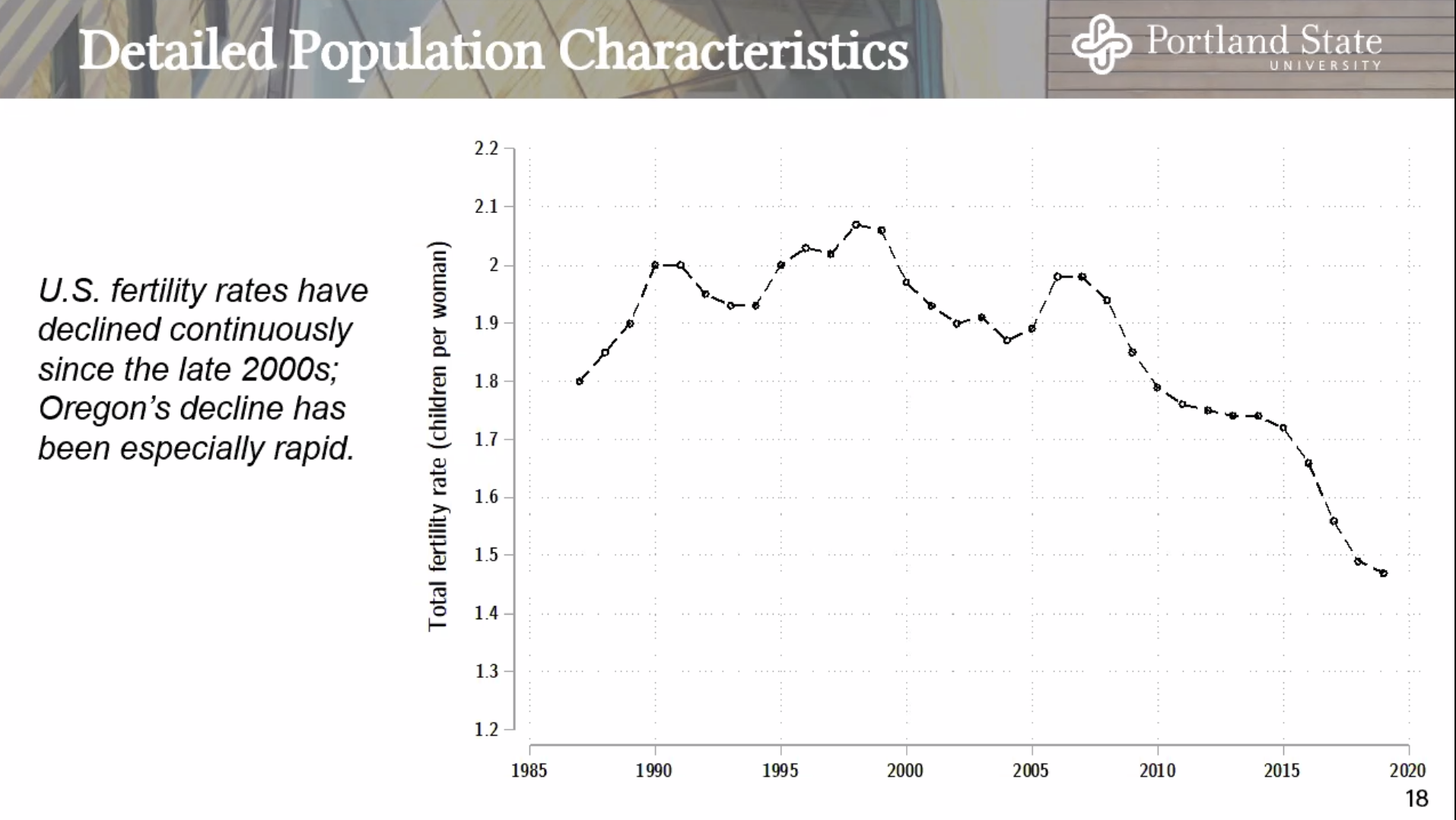 The U.S. birth rate is 1.7 per woman, while Oregon's birth rate is 1.5. This puts pressure on programs like Social Security that assume population growth.
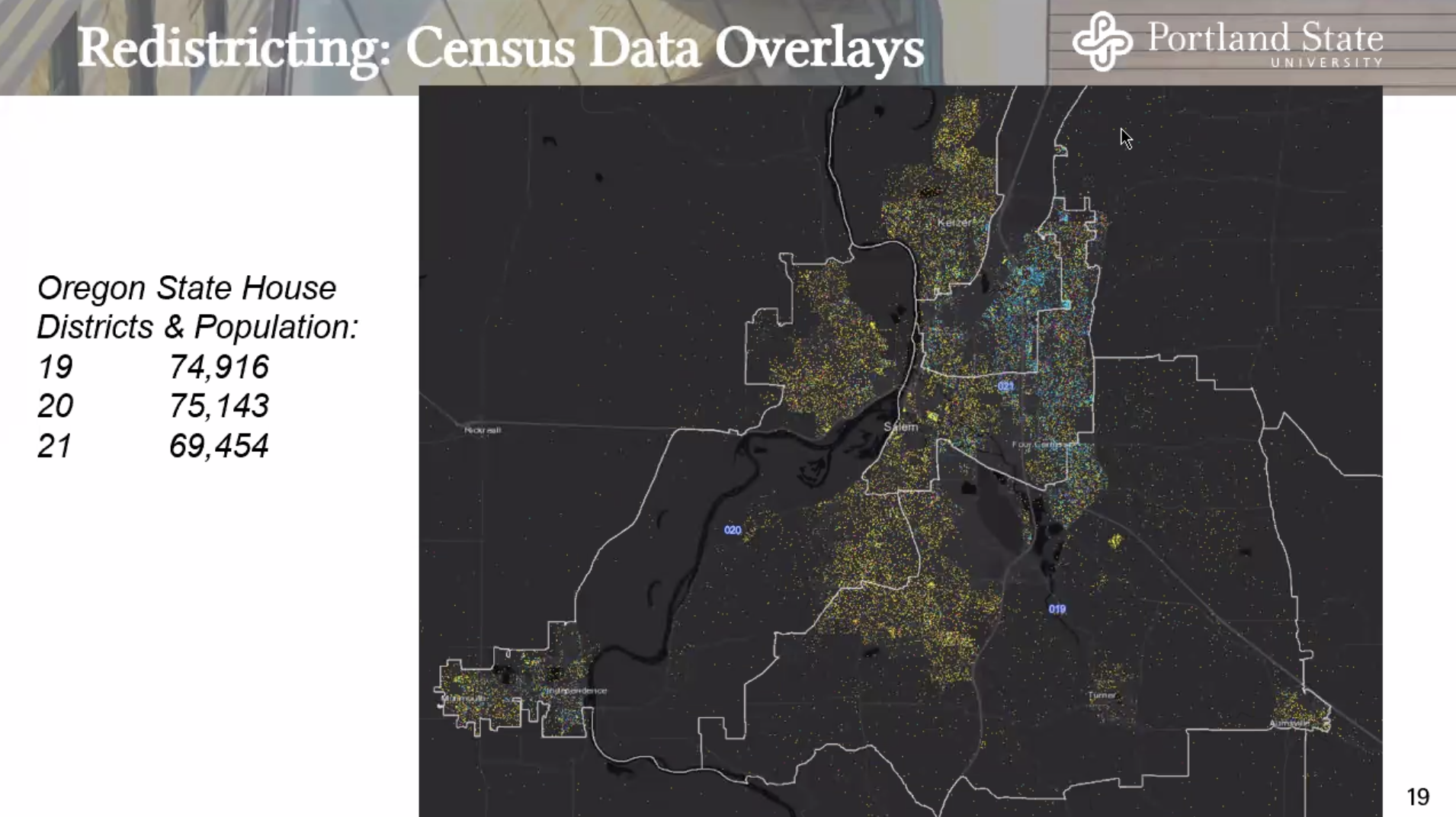
Redistricting relies on census data. This slide shows three House districts in the Salem area with their 2020 population, which needs to be equalized.
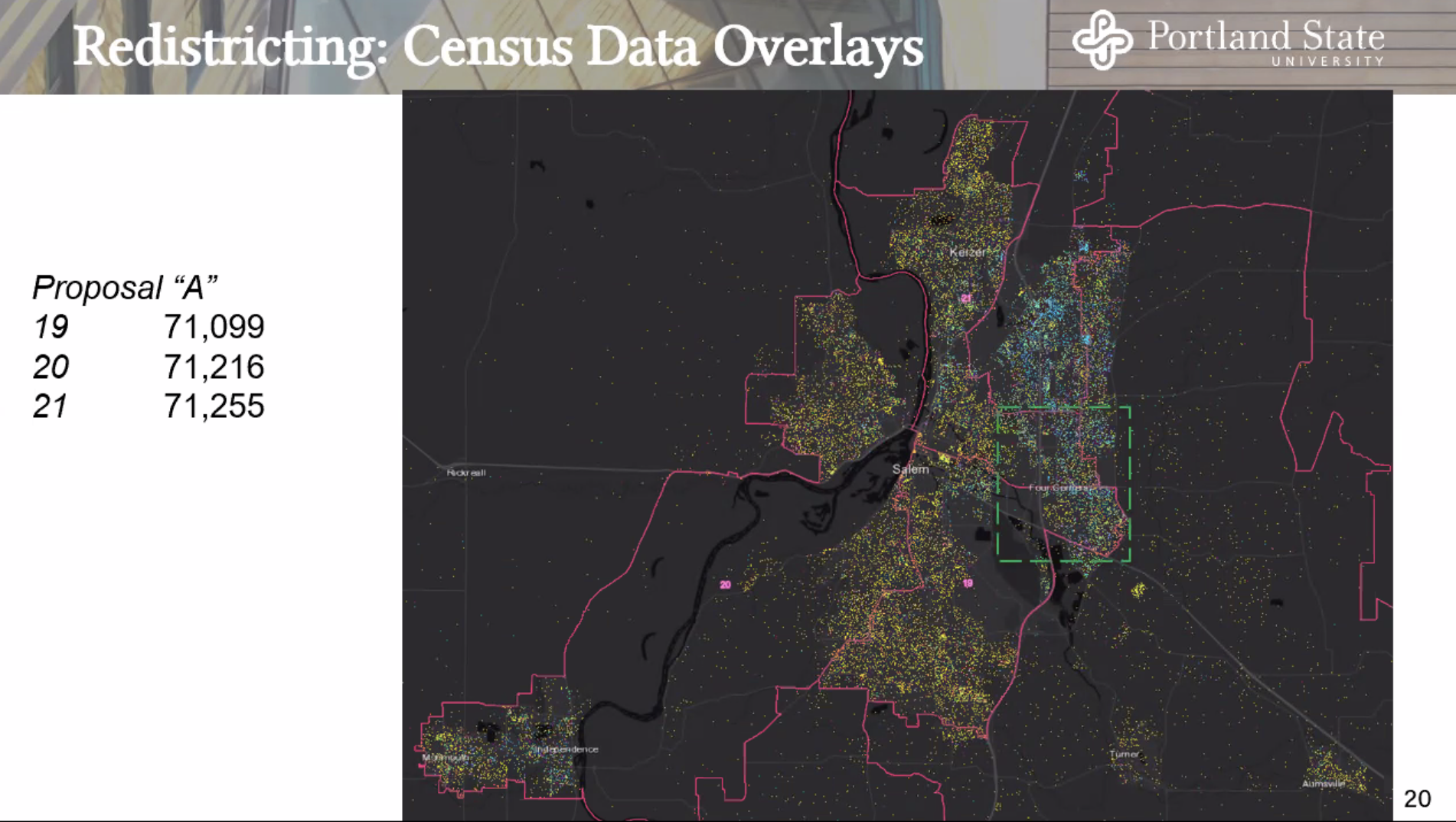
This is one proposal for redrawing the district boundaries to get an approximately equal population in each district.
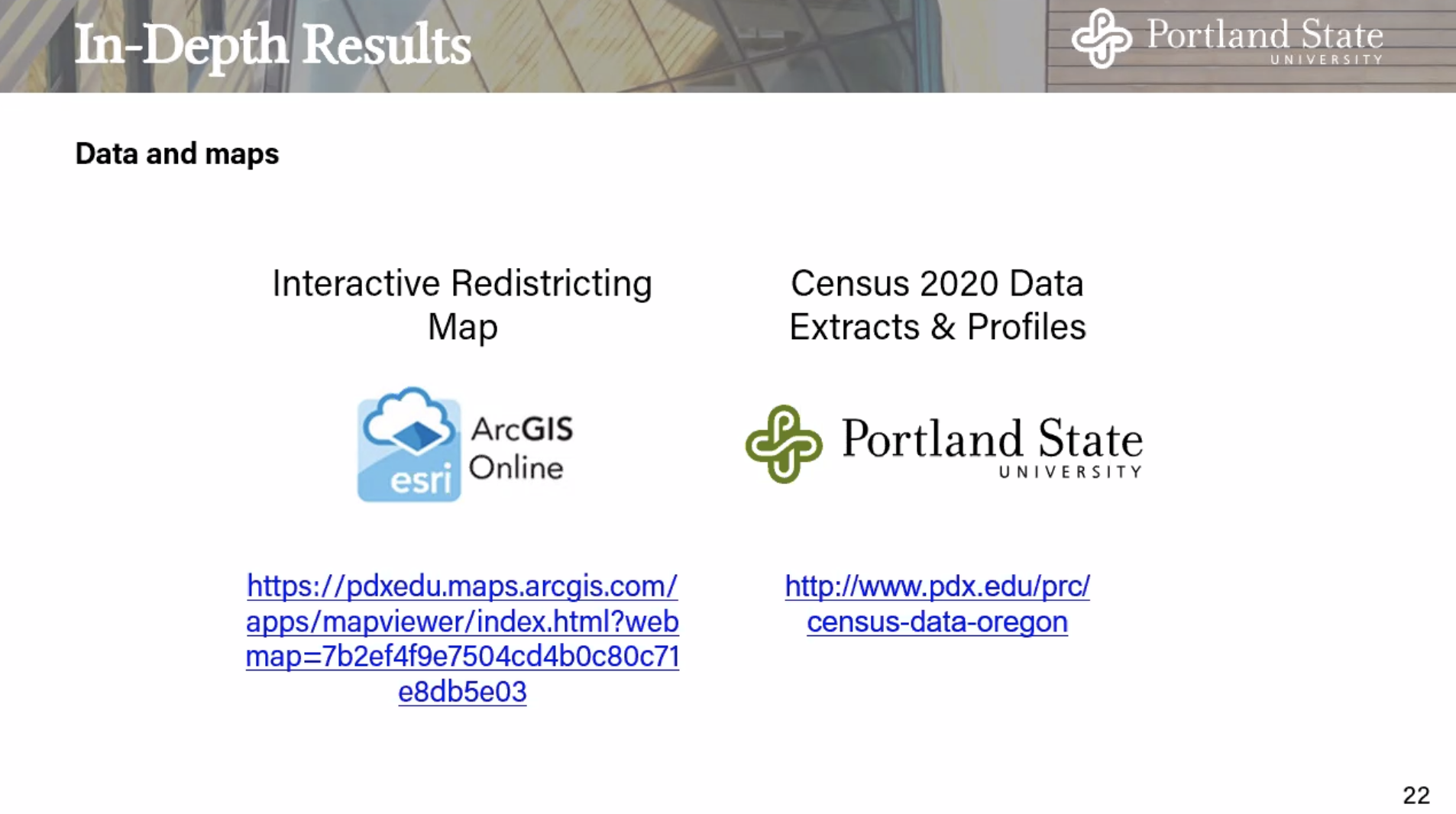
Sharygin ended with this slide, which shows where people can get more detailed census data and redistricting maps.
Discover more from Hinessight
Subscribe to get the latest posts sent to your email.
The image does not allow access to the more information…
Thanks for the writeup! A colleague notified me of your post. Great to see how these points landed. You’re correct in re: reasons that the BIPOC share of population is higher among younger age groups. The other factor is increasing the share of children with parents of different races, as a multi-racial child will be included in BIPOC counts.
Here are urls for the 2020 census population viewer and redistricting maps (including the maps approved by the legislature in SB881): https://arcg.is/OyqiW
And the other link is to our website: https://www.pdx.edu/prc/census-data-oregon