

For me the most tragic moment in this year’s Winter Olympics was Ilia Malinin, a hugely talented American figure skater, snatching defeat from the jaws of victory when he bungled a seemingly certain gold medal by falling twice in a performance where Malinin was so far ahead of his competition, all he needed to do was skate a clean program and the medal was his.

As his stood on the ice, unable to comprehend what had befallen him, there was still a lot of cheering from the audience. They recognized his brilliance, and how uncharacteristic his deeply flawed skating was on this particular night. You can watch his performance in this NBC Sports You Tube video.
A New York Times story, “Ilia Malinin squanders his prime Olympic hope: ‘I just felt like I had no control,’” describes the magnitude of what happened to Malinin.
When the music stopped, and his skate ended, Ilia Malinin buried his face in his black fabric-covered hands for a few seconds. And when he moved them, his face revealed how he understood exactly what just happened. The shock. The disappointment. The sadness. He couldn’t hide it. He had squandered the gold medal.
And the silver.
And the bronze.
“Honestly, I still haven’t been able to process what just happened,” he later told a throng of reporters.
…On the biggest stage of his life, needing only a solid performance, Malinin fell apart in the men’s free skate competition. His explosive athleticism, his skating form, his composure, it all failed him — creating one of the great upsets for which sports is known for producing. The weight, the whispers, they proved too much. He couldn’t get out of his head.
For those who need a comparison to understand, this was figure skating’s version of Mike Tyson losing to Buster Douglas, the undefeated Patriots losing in the Super Bowl, the 73-win Warriors blowing a 3-1 lead in the NBA Finals.
And yet…
Malinin congratulated Kazakhstan’s Mikhail Shaidorov, the unexpected gold medal winner, before he left for the locker room. Once there, Malinin spoke with a NBC reporter, saying, “I think it was definitely mental. Now, finally experiencing that Olympic atmosphere, it’s crazy. It’s not like any other competition. It’s really different.”
If I could speak with Malinin, I’d tell him, “Ilia, so many of us have been there and done that — just what you did, just not on such a worldwide stage; we’ve screwed up something big-time that ordinarily we could have handled just fine; but nerves, tension, trying too hard, or whatever resulted in disturbing disappointment rather than celebratory triumph.”
Life is uncertain. Life is unpredictable. Life is painful. Life throws us a curveball that we swing and miss at instead of the fastball that we planned to hit out of the park.
My own athletic squandered opportunity is far removed from Malinin’s. Still, it bothered me a lot at the time. Heck, it still does, even though I was in high school when it happened, some 60 years ago.
I was a singles player for the Woodlake High School tennis team in central California. Either my junior or senior year, can’t remember which, we needed to defeat the Lindsay High School team on their courts to win the league tennis championship.
Lindsay had a very good #1 singles player. I played either #1 or #2 singles. Our coach decided that I should play #2 against Lindsay, as that gave us a better chance of beating them, since whoever played #1 against their top guy probably would lose.
It was two out of three sets. I won the first set easily against an opponent who wasn’t as good a player as I was. Then my Malinin-lite downfall happened. I knew that all I needed to do was win another set and the championship was ours. Word had spread around the Lindsay High School campus about this. The Lindsay baseball team came over to watch my match after their practice was over.
I started to choke up. I stopped playing loose and relaxed. I started to play cautiously. When I began to lose the second set, I felt even more nervous. Most of the cheering was for my opponent, since we were playing on his tennis courts.
I kept thinking, “I’m way better than this guy; how could I be losing to him?” The third set also went badly for me. I’m sure I shook his hand after he beat me, but I don’t remember that. What I do distinctly remember is getting on the team bus, walking to the back, and throwing my racquet at the rear window, where it made a loud noise (but thankfully, didn’t break the glass).
I was pissed. I was super disappointed with myself for letting down my team. My coach trusted me to win at #2 singles, and I should have. But somehow I didn’t. My girlfriend, who also was on the tennis team, consoled me. That helped a bit, but I was basically unconsolable on the ride back to my high school.
Losing hurts. Especially when it happens not because your opponent beat you, but because you beat yourself. So, yeah, I empathize with what Ilia Malinin is going through right now. Losing a gold medal in the Winter Olympics obviously is a hugely bigger deal than losing a tennis championship in a league of small central California high schools.
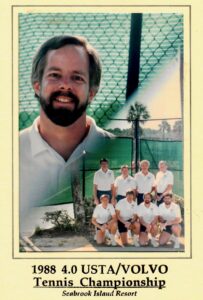
But mental pain doesn’t bear a lot of relationship to what brought it about. I’m confident that Malinin will bounce back and continue to have a stellar figure skating career. I kept on playing tennis for many years, eventually going to a USTA national tennis championship in South Carolina. While my team didn’t win there either, the loss didn’t bother me much, as I was older and a bit wiser — realizing that life often doesn’t turn out how we want or expect, and that’s OK.
Discover more from Hinessight
Subscribe to get the latest posts sent to your email.