

I have a friend who was born in Germany. She tells me that in Europe, almost all power lines are buried. She can't understand why here in Oregon, so many power lines are strung along wooden poles — a "technology" dating from the 1800's when telegraph lines used the same approach.
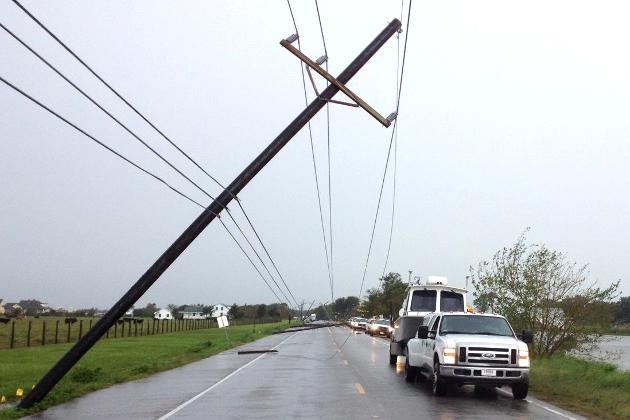
After every major disastrous weather event in our area, such as the high winds and freezing rain that caused massive problems in the Portland area recently, along with freezing rain that decimated the Eugene area, there's calls for our power companies (PGE and Pacific Power, mainly) to do a better job of both preventing damage to lines and restoring service more rapidly.
Since my neighborhood in rural south Salem was without power for eleven days in 2021 due to a serious ice storm, I'd love it if PGE buried the power lines that supply electricity to the several hundred homes in our area that regularly lose power, usually due to tree branches, or an entire tree, taking a line down.
Today a letter to the editor in the Sunday Oregonian resonated with me, big-time.
When are we, as a society, going to decide to make it a priority to keep people safe by changing the codes and paying the price to bury power lines? (“Portland winter storm: Power outages, grounded planes, dangerous roads continue Wednesday,” Jan. 17). For now, I am living in a country and a city where each citizen is responsible for themselves. I am fortunate to have great neighbors and friends who look out for each other. I am thinking about the many people who are not as lucky as I am.
I am safe but angry. I have wood for the fireplace. I dug my camping stove out of the earthquake kit. In the days before the storm, I went grocery shopping and charged the lantern and the power bank. Unlike my neighbors, I still have water and no tree has landed on my house.
What makes me angry is that all of the above was expected, as it is the same playbook with each major storm. I am 71 years old and each storm is more difficult to bear than the last one. I have lived in Canada with blizzards and temperatures as low as -25 degrees Fahrenheit, but never lost power. I have lived in the Swiss mountains with blizzards and never lost power.
I have been without power since 9 a.m. on Saturday morning. I abandoned my house on Monday morning, when the temperature inside the house got down to 32 degrees Fahrenheit and even a day later, I still did not have an estimate for when my power would be restored.
Irene Vlach, Portland
Unfortunately, it's unlikely that very many existing above-ground power lines in Oregon are going to be buried anytime soon. A post-ice storm Willamette Week article from February 2021, "Why Don't We Put Our Electric Lines Underground?", provided the simple answer in response to a reader's question.
You'd think that if anyone would be motivated to put their power lines underground, it would be fire-ravaged California.
And yet it hasn't happened. It also hasn't happened in hurricane-ravaged North Carolina or, as you point out, in ice-storm-ravaged Oregon. The reason, I'm sure you'll be shocked to learn, is money.
Here's the problem: Building a mile of overhead transmission line costs about $800,000. Building a mile of underground power line, meanwhile, costs $3 million to $4 million. And, of course, leaving a mile of existing line right where it is and going out for a beer costs approximately $6, plus you get a beer. You don't have to be Elon Musk to see how the incentives pencil out in this situation.
Okay, so what's the next best option, if burying existing lines isn't going to happen? Well, PGE has been doing a decent job at trimming trees that pose a risk to power lines. Recently I was pleased to see crews from Asplundh doing their tree-trimming thing along Liberty Road, where our neighborhood's electricity comes from.
PGE should be even more aggressive in its tree management.
It's good to trim branches when an electrical line passes close to a tree, but even better is taking down an entire tree if it poses a significant risk to the line. Nobody likes to lose a tree on their property. But nobody likes to go without electricity for days, which can happen when trees topple because of freezing rain, heavy snow, or high wind.
If PGE and other Oregon utilities don't have enough money to bury power lines, then they should do a better job of preventing damage to above-ground lines. An editorial in today's Oregonian, "Oregonians must build a culture of resilience," makes some great points.
Last week’s winter storm took a tragic toll on our state. At least 13 Oregonians died due to hypothermia, falling trees, fire and electrocution from fallen power lines – brutal circumstances in which vulnerability and bad luck combined to horrific effect.
The misery did not end there as tens of thousands of people across western Oregon endured days-long power outages in subfreezing temperatures. Homeless Oregonians in the Portland area sought refuge in warming shelters only to be sent back out into frigid temperatures later in the week. With high winds and low temperatures, trees toppled onto houses while frozen pipes burst, flooding homes and businesses. A forecast of rain and 40-degrees never sounded so good.
Electric utilities, county officials and the many agencies involved in emergency services will be reviewing their response in the coming days and weeks. But on a local, regional and state level, from individual households to power companies, Oregon needs to significantly up its preparation game. With such extreme weather events expected to become more common in our changing climate, we are witnessing the limits of our infrastructure and the vast needs left unmet. And with significant risk of a massive subduction zone earthquake hitting the Northwest, we must use this storm as motivation to build a culture of resilience.
That should start with a robust evaluation by regulatory and emergency management agencies of utilities’ performance and vulnerabilities. For days, even as much of the country struggled with winter weather disruptions, Oregon led the nation in number of outages, based on poweroutage.us reports. The cause of outages, barriers to restoring service, difficulties in communication all require greater analysis of what, if anything, can be changed, as well as a focus on tree health and maintenance.
Discover more from Hinessight
Subscribe to get the latest posts sent to your email.