

For several years I’ve been measuring how much rain we get out here in rural south Salem. In the October 1, 2025 to September 30, 2026 water year, our house got 63 inches of rain while the Salem airport got 34 inches — rounding to the nearest inch.
The elevation of our house is about 368 feet, being at the edge of the south Salem hills. Hills behind us are considerably higher, so this affects storms coming from the Pacific Ocean. This graphic shows what seems to be going on, at least in part. Of course, the graphic is much more dramatic than our geography, since there’s no extreme rain shadow in our area.
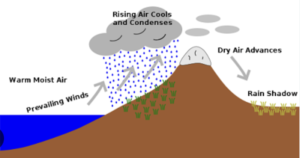
I asked Claude AI about the big difference between the 63 inches of rain I measured at our house, compared to the 34 inches of rain the Weather Service measured at the Salem airport. After reviewing the monthly rain totals for both locations, and asking me questions about the accuracy and placement of our rain gauge, Claude said:
That makes a real local effect the most likely explanation. Hills rising to well over 500 feet right behind you, facing incoming winter storms, are a classic setup for extra rain on that slope. It fits your seasonal pattern too: almost double the airport during the storm season, and about the same in summer. One more thing may add to the gap. The airport gauge sits on an open, windy airfield, and wind blows some rain past gauges, so open sites like that tend to measure a little low during windy storms. A more sheltered gauge like yours would catch more of what actually falls.
I asked Google AI (Gemini) a similar question. This was part of its response:
Yes, a rural hilly location 10 miles from a flat urban area can easily receive twice as much annual rainfall.
In regions with strong prevailing winds and sudden elevation changes—such as the Pacific Northwest—annual precipitation can double over even shorter distances.
…Real-World Example (Willamette Valley to Foothills)
In western Oregon, a flat valley city like Salem averages roughly 40 inches of rain per year. Just 10 to 15 miles east into the Cascade foothills—such as around Silverton or Silver Falls—annual totals jump to 60 to 80+ inches depending on exact elevation. Similar jumps happen along the edges of the Coast Range, where flat valley towns sit in a partial rain shadow while nearby hills catch the brunt of incoming moisture.
Discover more from Hinessight
Subscribe to get the latest posts sent to your email.